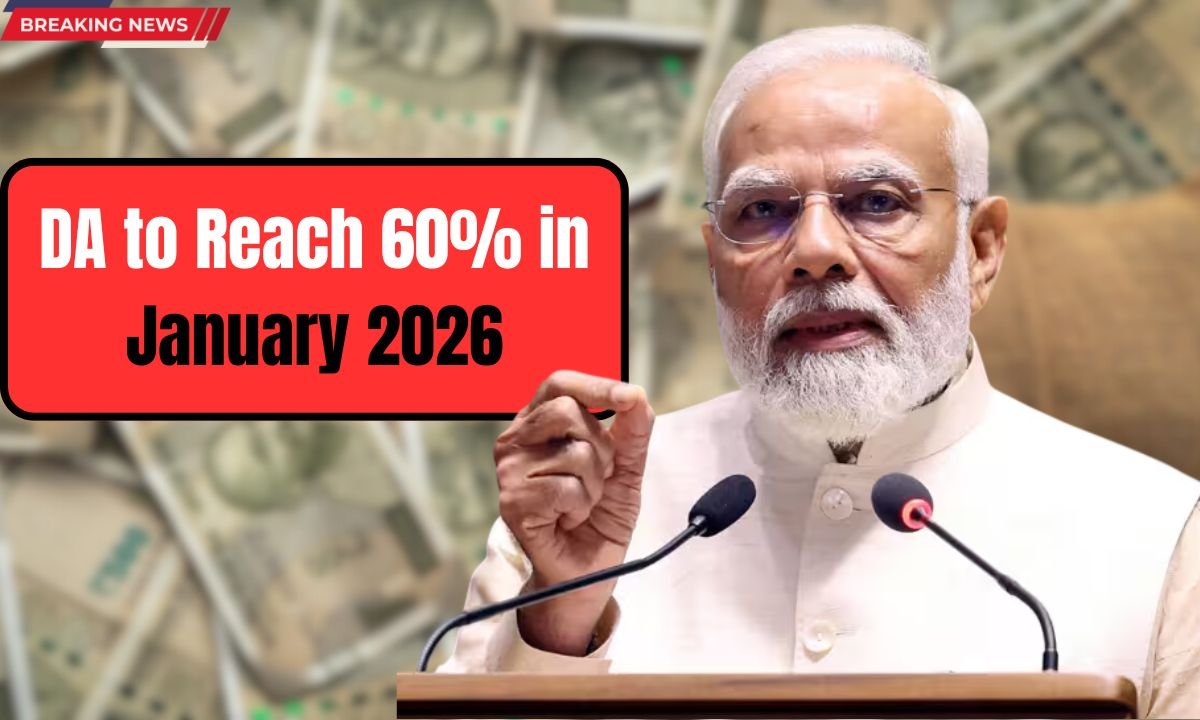
Dearness Allowance or DA is a crucial pay component for Indian central government employees and pensioners, with bi-annual up-gradation to correspond with price depreciations. It has now reached an elevated pitch when it is expected to head towards the 60% label by January 2026, this time in the 7th Pay Commission framework.
Giveaway on the Rising DA
The Department of Labour & Employment had released the AICPI IW for November 2025, showing 148.2 points. This took the average of 12 rolling months very near the next DA slabs. It was calculated between clear 59.93%, last November, so only some ephemeral value of this awaits the next 60% level. The government has acceded to endorse this hike due as of January 1, 2026, having gone through the inflation numbers for December.
Impact on the Employees and Pensioners
It will pave the way to assist over 49 lakh central government employees and over 68 lakh pensioners. The hike in DA could directly increase the take-home amount for employees, whereas the pensioners would get an enhanced DR. The enhancement keeps inflation at bay so that the consumption power of both groups should not be withered by inflation.

Economic Implications
This DA increase will lead to higher disposable income and will thus increase demand in all sectors. This will ultimately end up helping economic growth but it becomes a hurdle in the goal of fiscal management.
The Link of the 8th Pay Commission
This DA rise will align perfectly with the starting 8th Pay Commission, which will be applied from January 2026. The higher DA levels and post-implementation reimbursement DA will play a role in fixing the new fitment factor, the new revised pay scales, and, thus, the higher salary and the pension.
Comparison of DA Levels
| Period | DA Percentage | Basis of Calculation |
|---|---|---|
| July 2025 | 58% | AICPI-IW average |
| November 2025 | 59.93% | AICPI-IW at 148.2 |
| January 2026 (effective) | 60% | Confirmed by Labour Bureau |
In conclusion
The announcement that DA will touch 60% by January 2026 could not come fast enough for these central government employees and pensioners. It signifies that the government is committed to protecting wage earners from inflation and thereby sustains financial stability. In the and with the 8th Pay Commission coming into effect, in 2026, there looks to be a real promise of significant financial amelioration for millions of households across India.